
Cold Intolerance and Weight Gain? It Could Be Hypothyroidism - Tests to Take
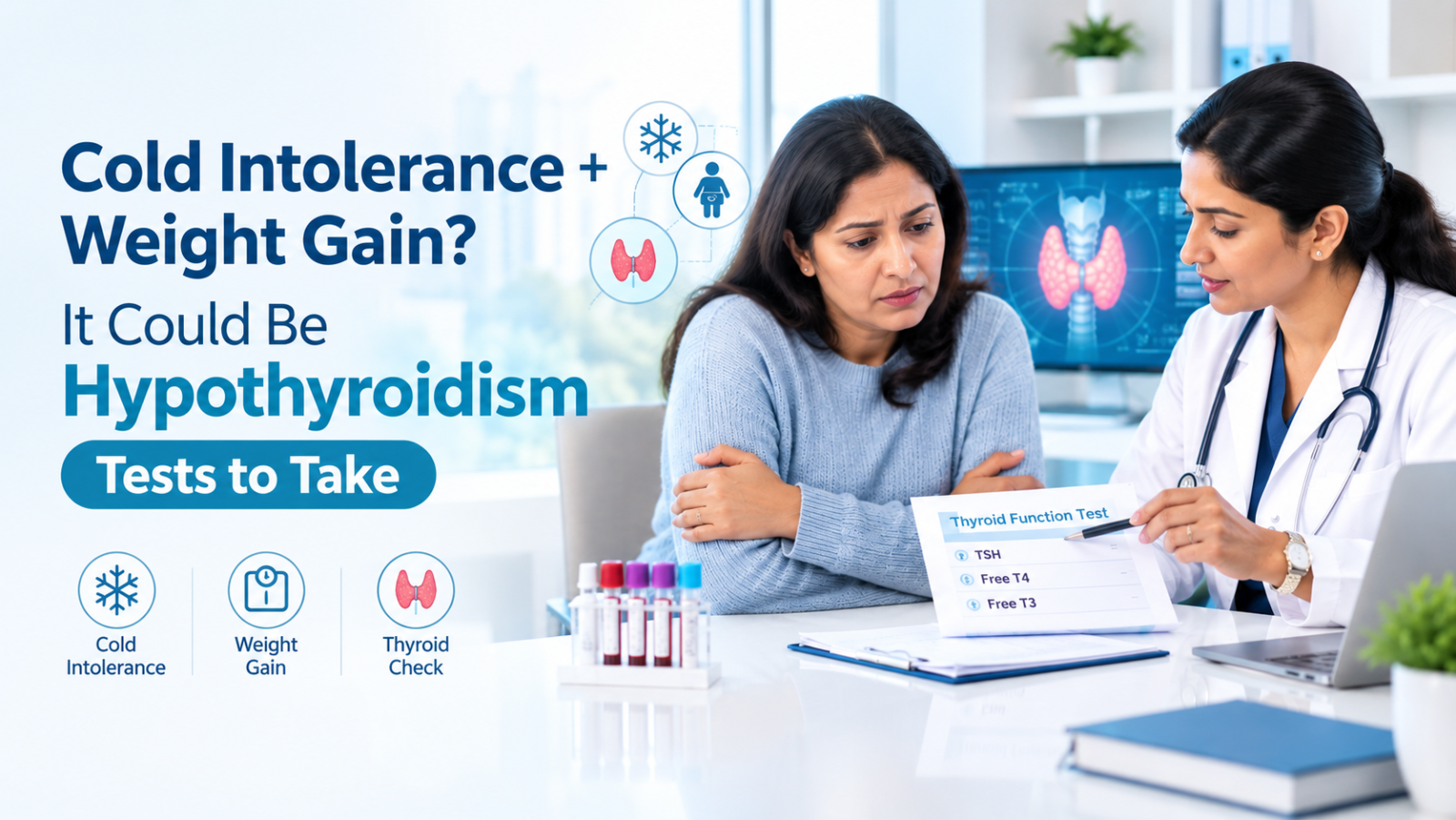
Feeling unusually cold while everyone around you seems comfortable can be frustrating. Moreover, if you are also gaining weight, feeling tired, or noticing changes in your skin and hair, you may wonder whether your thyroid is involved. One possible explanation is hypothyroidism, a condition in which the thyroid gland does not produce enough thyroid hormones.
However, these symptoms can have several causes. Therefore, blood tests are important before assuming that your thyroid is the reason.
For Bangalore women aged 25–45, thyroid testing can be particularly relevant when symptoms develop alongside menstrual, fertility, or other hormonal changes.
Which Test Confirms Hypothyroidism?
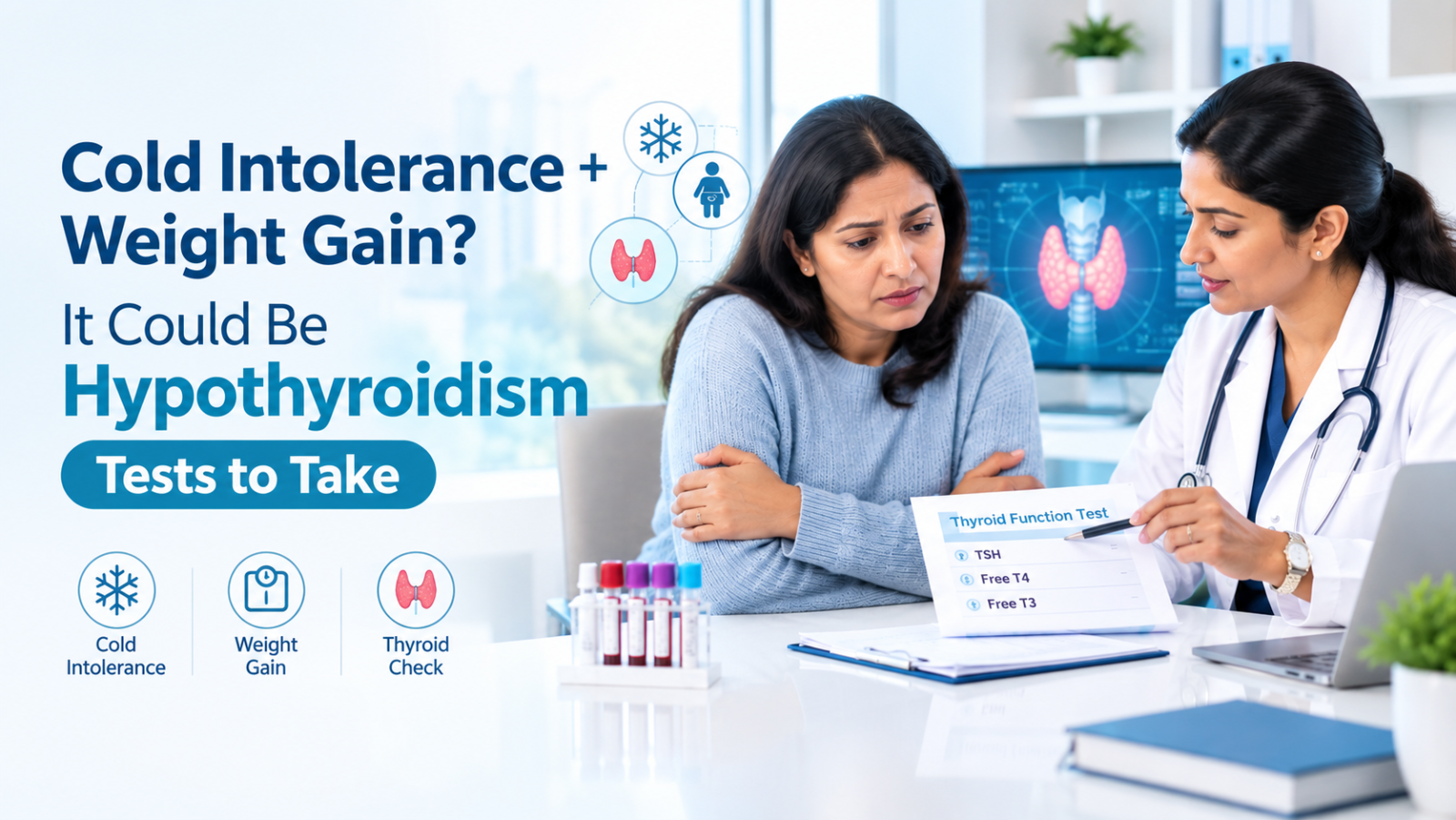
The TSH blood test is usually the first test used to evaluate hypothyroidism. However, Free T4 is commonly checked alongside TSH to understand thyroid hormone levels and help determine the pattern and severity of thyroid dysfunction.
In some situations, an Anti-TPO antibody test may also be recommended to look for evidence of autoimmune thyroid disease, such as Hashimoto's thyroiditis.
Therefore, a complete thyroid evaluation may involve TSH + Free T4, with Anti-TPO added when clinically appropriate.
Hypothyroid Signs Checklist
Hypothyroidism can develop gradually. As a result, symptoms may initially seem unrelated.
Feeling Cold More Than Usual
Cold intolerance is a commonly recognised symptom of an underactive thyroid. If you regularly feel colder than people around you, especially when this is a new change, it may be worth discussing with a doctor.
Unexplained Weight Gain
Weight gain can occur with hypothyroidism because reduced thyroid hormone activity can affect metabolism.
Nevertheless, weight gain alone does not prove that you have hypothyroidism. Diet, activity, medications, sleep and several other conditions can also contribute.
Persistent Tiredness
Another common complaint is feeling tired even after getting enough sleep.
Consequently, if fatigue occurs together with cold intolerance and weight changes, thyroid testing may be useful.
Dry Skin and Hair Changes
You may also notice:
- Dry or rough skin
- Hair thinning
- Brittle hair
- Increased hair fall
- Puffy-looking face
However, these symptoms can also occur because of nutritional deficiencies and other hormonal conditions.
Other Symptoms of an Underactive Thyroid
Besides cold intolerance and weight gain, hypothyroidism may be associated with:
- Constipation
- Reduced energy
- Difficulty concentrating
- Low mood
- Muscle aches
- Muscle weakness
- Slow heart rate
- Hoarse voice
- Changes in menstrual cycles
- Fertility difficulties
Importantly, not everyone experiences the same symptoms. Therefore, testing becomes more useful when symptoms persist or occur in combination.
Tests for Hypothyroidism
1. TSH Test
TSH, or thyroid-stimulating hormone, is generally the starting point for thyroid evaluation.
When thyroid hormone production falls, the pituitary gland may produce more TSH to encourage the thyroid to work harder. Therefore, an elevated TSH can be a sign of an underactive thyroid, although interpretation depends on the clinical context.
2. Free T4 Test
Free T4 measures the unbound portion of thyroxine available in the bloodstream.
When TSH is abnormal, Free T4 helps determine whether thyroid hormone levels are actually reduced.
Consequently, TSH and Free T4 are often interpreted together rather than looking at either result in isolation.
3. Anti-TPO Antibody Test
Anti-TPO detects antibodies against thyroid peroxidase, an enzyme involved in thyroid hormone production.
An elevated Anti-TPO level can support the possibility of an autoimmune thyroid condition.
However, a positive antibody result does not by itself establish how well the thyroid is functioning. That is why TSH and Free T4 remain important.
Reading Your Thyroid Test Values
Understanding thyroid reports can be confusing because reference ranges differ between laboratories.
What Does a High TSH Mean?
A high TSH may indicate that the thyroid is not producing enough hormone. However, the result must be considered alongside Free T4, symptoms, medications, pregnancy status and the laboratory's reference range.
What Does a Low Free T4 Mean?
A low Free T4 can indicate reduced thyroid hormone availability. When combined with an elevated TSH, it may support a diagnosis of primary hypothyroidism.
What Does a Positive Anti-TPO Mean?
Positive Anti-TPO antibodies can indicate an autoimmune tendency affecting the thyroid.
Nevertheless, antibody results should not be interpreted as a standalone diagnosis.
When Should You Get Tested?
Thyroid testing may be worth discussing with your healthcare provider if you have several persistent symptoms, particularly when they occur together.
For example:
Cold intolerance + weight gain + tiredness + dry skin may justify a thyroid evaluation.
Similarly, women experiencing menstrual changes, fertility difficulties or unexplained fatigue may benefit from discussing thyroid testing with their doctor.
Thyroid Testing and Menstrual Changes
Thyroid hormones can influence reproductive health. Therefore, women with an underactive thyroid may experience changes in menstrual cycles.
Who Is at Higher Risk?
Hypothyroidism can affect anyone. However, some people have a higher likelihood of developing thyroid disease.
Women
Women are more likely than men to develop autoimmune thyroid conditions. Consequently, persistent symptoms in women should not be dismissed as simply stress or lifestyle changes.
Bangalore Women Aged 25–45
For women in Bangalore between approximately 25 and 45, thyroid concerns may come up during routine health checks, pregnancy planning, postpartum periods, or when symptoms such as fatigue and menstrual changes develop.
However, age alone does not mean that thyroid testing is necessary. Symptoms and individual risk factors matter.
Family History
Having a family history of thyroid disease can increase the likelihood of thyroid problems.
Therefore, tell your healthcare provider if parents, siblings, or other close relatives have been diagnosed with thyroid disorders.
Other Risk Factors
Risk may also be influenced by:
- Previous thyroid problems
- Autoimmune conditions
- Pregnancy or recent childbirth
- Certain medications
- Previous neck radiation
- Increasing age
Prima Thyroid Package in Bangalore
If you need several thyroid-related investigations, a thyroid package can be a convenient option depending on the tests included.
Prima Diagnostics provides thyroid testing services in Bangalore. Depending on your symptoms and your doctor's recommendation, testing may include TSH, Free T4, and other thyroid investigations.
Why Consider a Thyroid Package?
A package may make it easier to arrange multiple related tests together. Moreover, having relevant results available at the same time can help your healthcare provider assess your thyroid status more efficiently.
Nevertheless, always check which tests are actually included before booking.
What If Your Thyroid Tests Are Abnormal?
An abnormal result does not necessarily mean that you need immediate treatment.
Instead, your doctor may:
- Review your symptoms and medical history.
- Examine the TSH and Free T4 results together.
- Consider Anti-TPO testing.
- Review medications and other possible causes.
- Repeat testing when appropriate.
- Recommend treatment if hypothyroidism is confirmed.
Therefore, avoid starting thyroid medication based solely on an online interpretation of your report.
FAQs About Hypothyroidism
1. Which test confirms hypothyroidism?
TSH is generally the first-line blood test for suspected hypothyroidism. Free T4 is commonly used alongside it to assess thyroid hormone levels. Anti-TPO may be added when autoimmune thyroid disease is suspected.
2. Can hypothyroidism cause weight gain?
Yes, hypothyroidism can contribute to weight gain. However, weight gain has many possible causes, so thyroid testing is needed before attributing it to an underactive thyroid.
3. Does feeling cold always mean I have hypothyroidism?
No. Cold intolerance can have several causes. However, when it occurs with tiredness, weight gain, constipation, dry skin or other symptoms, discussing thyroid testing with a healthcare professional may be appropriate.
4. Should women with irregular periods get thyroid testing?
Thyroid problems can affect menstrual cycles. Therefore, women with persistent or unexplained menstrual changes may be advised to undergo thyroid testing as part of a broader evaluation.
5. Is Anti-TPO enough to diagnose hypothyroidism?
No. Anti-TPO mainly helps identify autoimmune thyroid disease. Thyroid function is primarily assessed using tests such as TSH and Free T4.
6. Where can I get a thyroid test in Bangalore?
[Prima Diagnostics] provides thyroid testing services across its diagnostic network in Bangalore. The appropriate tests can depend on your symptoms and healthcare provider's recommendation.
Conclusion
Feeling cold, gaining weight and feeling tired can certainly raise questions about hypothyroidism. However, these symptoms alone cannot confirm an underactive thyroid.
Instead, start with appropriate thyroid testing. In most cases, TSH is the key first test, while Free T4 provides additional information and Anti-TPO can help identify an autoimmune cause when appropriate.
Furthermore, if you are a woman experiencing persistent fatigue, weight changes or menstrual changes, discussing thyroid testing with your healthcare provider can be worthwhile. Ultimately, the combination of your symptoms, medical history and laboratory results provides a much clearer picture than any single symptom or number.