
Blood Sugar Levels in Pregnancy Chart - GTT Normal Values
GTT Normal Values
Pregnancy brings many changes to the body, and blood sugar is one of the areas that may need closer monitoring. Therefore, your doctor may recommend a Glucose Tolerance Test (GTT) during pregnancy to check how your body handles glucose.
In particular, GTT is commonly used to screen for gestational diabetes mellitus (GDM). However, seeing a number outside the normal range does not mean you should panic. Instead, the result needs to be interpreted according to the testing method, pregnancy stage, and laboratory or clinical guidelines being followed.
So, what are normal GTT values in pregnancy? And what happens if one or more readings are high?
What are GTT normal values in pregnancy?
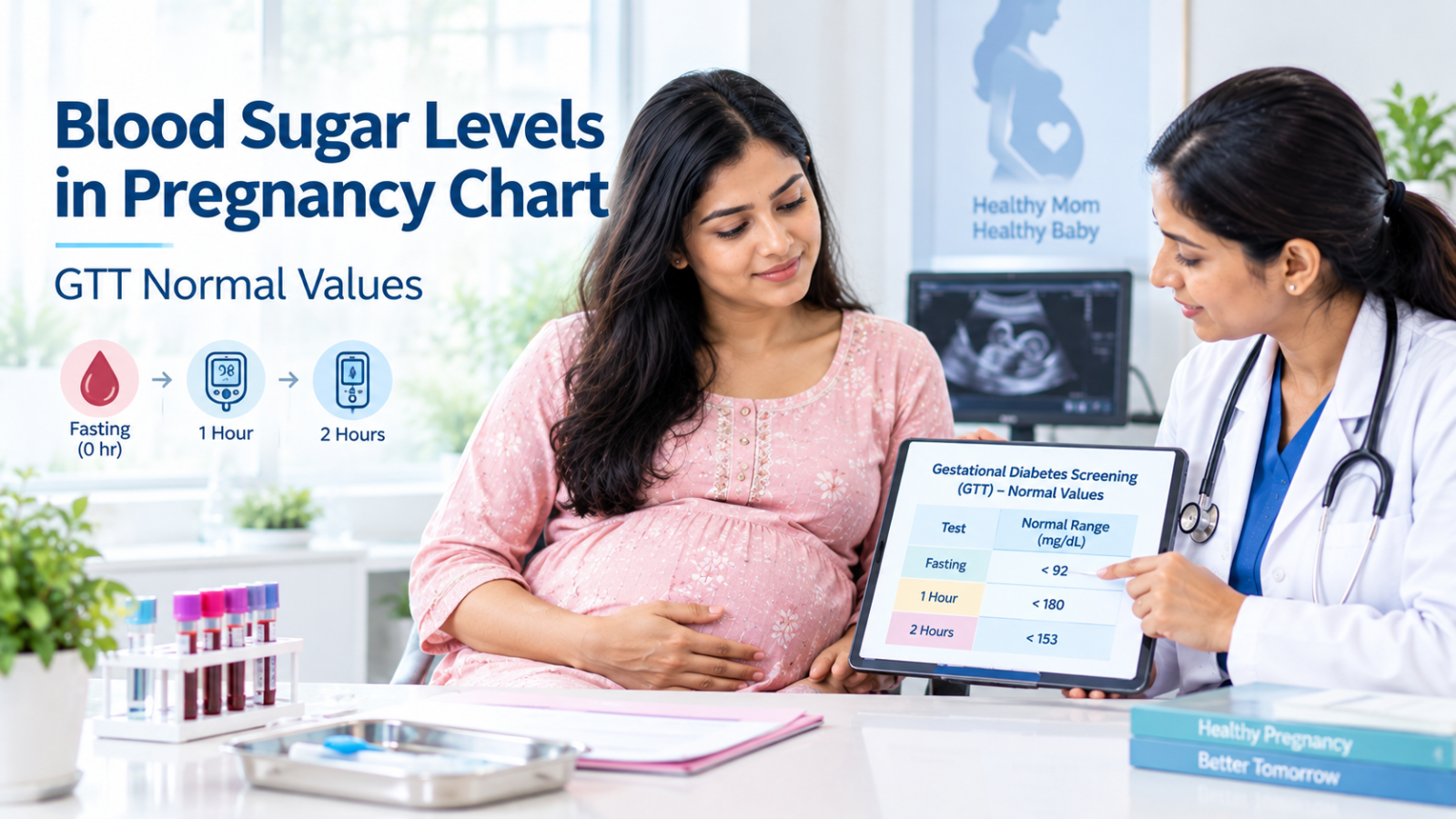
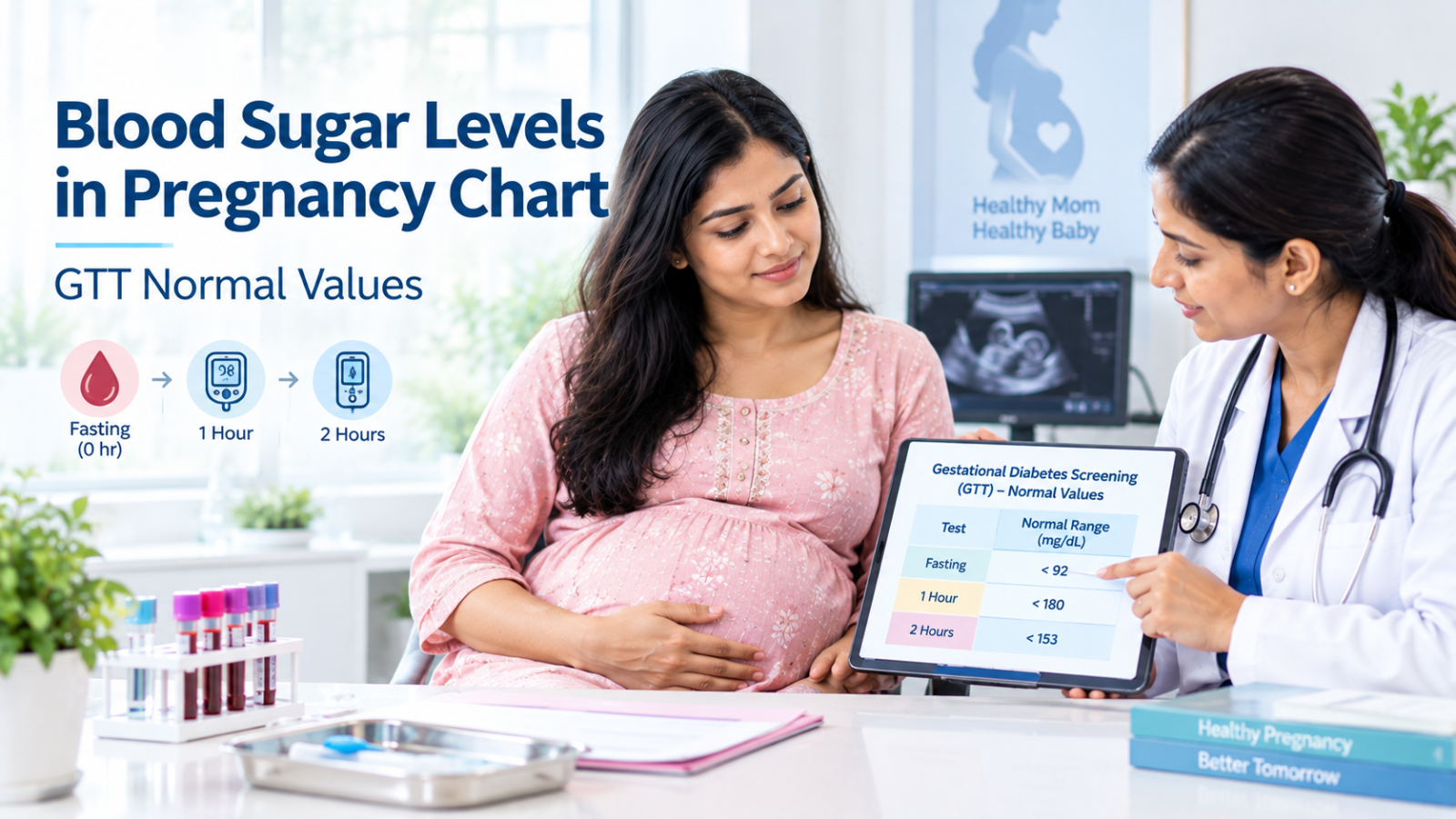
For a commonly used 75-g oral glucose tolerance test (OGTT) in pregnancy, the generally used values are:
GTT Reading |
Normal Value |
Gestational Diabetes Cut-off* |
|
Fasting |
Below 92 mg/dL |
92 mg/dL or higher |
|
1 hour |
Below 180 mg/dL |
180 mg/dL or higher |
|
2 hours |
Below 153 mg/dL |
153 mg/dL or higher |
Testing protocols can differ, so your doctor's and laboratory's reference criteria should always be followed.
Importantly, one abnormal value may be sufficient for a diagnosis of gestational diabetes under this approach.
What Is a GTT in Pregnancy?
A Glucose Tolerance Test, also called an oral glucose tolerance test or OGTT, measures how your blood glucose changes after you consume a measured amount of glucose.
First, a fasting blood sample is taken. Then, you drink a glucose solution. After that, another blood sample is collected at a specified time, commonly one and two hours later.
Consequently, the test provides more information than a single fasting blood sugar measurement.
Why Is GTT Done During Pregnancy?
During pregnancy, hormonal changes can make the body less sensitive to insulin.
As a result, some women develop gestational diabetes even if they never had diabetes before pregnancy.
Therefore, GTT can help identify women whose blood glucose rises more than expected after consuming glucose.
Early identification is useful because appropriate management can help reduce pregnancy-related complications.
Pregnancy Blood Sugar Chart at a Glance
Fasting GTT value
The fasting reading is measured before the glucose drink.
For the commonly used 75-g pregnancy OGTT, a fasting value of 92 mg/dL or higher meets the gestational diabetes threshold.
However, your doctor may use a different testing protocol in certain circumstances.
1-hour GTT value
The one-hour reading shows how your blood sugar responds after the glucose drink.
A value of 180 mg/dL or higher meets the commonly used pregnancy OGTT threshold.
2-hour GTT value
The two-hour reading provides another important measure of glucose handling.
A value of 153 mg/dL or higher meets the commonly used threshold.
Therefore, looking at all the readings together is important.
GTT Normal Values vs Gestational Diabetes Cut-Offs
It is easy to confuse a normal range with a diagnostic cut-off.
For example, if your two-hour result is 150 mg/dL, it is below the commonly used 153 mg/dL threshold for the 75-g OGTT. On the other hand, a result of 155 mg/dL is above that threshold.
Nevertheless, the result should still be interpreted by your healthcare provider rather than in isolation.
Are These GTT Values the Same Everywhere?
Not necessarily.
Different testing strategies are used internationally. For example, some settings use a 75-g, 2-hour OGTT, while other protocols use a two-step approach involving a glucose challenge followed by a 100-g, 3-hour OGTT.
Moreover, diagnostic thresholds can differ between protocols.
Therefore, do not compare your result with a random chart online unless you know which test and criteria were used.
How Is the GTT Done During Pregnancy?
The exact instructions can vary. However, a typical 75-g OGTT involves several steps.
Step 1: Fasting
You may be asked to fast overnight before the test.
During this period, follow the laboratory's instructions regarding food and drinks.
Step 2: First blood sample
A fasting blood sample is collected before the glucose solution.
Step 3: Drink the glucose solution
You then drink the prescribed amount of glucose solution.
Step 4: Wait for the timed samples
After drinking, you remain at the testing location while waiting for the scheduled blood samples.
Step 5: One-hour and two-hour samples
Blood samples are collected at the required times.
Consequently, timing is important because the results are linked to exactly how long it has been since the glucose drink.
What Should You Do During the Test?
While waiting between samples, it is generally best to remain at the testing centre and avoid strenuous activity unless your healthcare provider or laboratory instructs otherwise.
Furthermore, eating during the test can affect the results.
Therefore, follow the laboratory's specific instructions carefully.
When Is GTT Usually Done?
Gestational diabetes screening is commonly performed around 24–28 weeks of pregnancy when earlier testing has not already been indicated.
However, your doctor may recommend testing earlier if you have risk factors or a previous history of gestational diabetes.
Therefore, the timing should be decided as part of your antenatal care.
What If GTT Values Are High?
First of all, do not panic.
A high GTT result means your healthcare provider needs to assess your glucose control more closely. Depending on the result and the testing protocol, you may be diagnosed with gestational diabetes.
Next, your doctor may recommend:
- Dietary changes
- Regular physical activity appropriate for pregnancy
- Blood glucose monitoring
- Follow-up appointments
- Medication or insulin when necessary
Most importantly, do not start a restrictive diet or medication on your own during pregnancy.
Why Controlling Blood Sugar Matters
Gestational diabetes can increase the risk of certain pregnancy and delivery complications.
However, appropriate monitoring and treatment can help manage these risks.
Therefore, if your GTT is abnormal, the next step is not simply to worry about the number. Instead, work with your obstetrician or healthcare team to create an appropriate management plan.
GTT and HbA1c: Are They the Same?
No.
A GTT measures how your body responds to a glucose load at specific time points. In contrast, HbA1c reflects average blood glucose over approximately the previous two to three months.
Therefore, HbA1c and GTT provide different information.
During pregnancy, your doctor may choose one or more glucose tests depending on your individual circumstances.
Don't Confuse GTT With Hemoglobin Testing
The terms can sometimes be confusing.
GTT is related to glucose tolerance and blood sugar, whereas Hb or hemoglobin testing checks the oxygen-carrying protein in red blood cells.
Both can be part of antenatal care, but they answer completely different questions.
Prima Antenatal Package
Regular antenatal testing can help monitor both the mother's health and the pregnancy.
A Prima antenatal package may include relevant pregnancy blood tests depending on the package selected and the stage of pregnancy.
If your doctor has specifically requested a GTT, confirm that the selected package includes the required glucose tolerance test and timed samples.
For added convenience, Prima GTT with home collection may be available in selected Bangalore locations, depending on service coverage and appointment arrangements.
Because GTT requires carefully timed samples and specific preparation, confirm the collection procedure before booking.
GTT Home Collection: What to Check
If you are considering home collection, timing becomes particularly important.
First, confirm whether the service supports the complete GTT procedure rather than only a fasting blood sample.
Next, check:
- Fasting requirements
- Glucose drink arrangements
- Timing of each blood sample
- Whether you need to remain at home during the test
- Exact service availability at your address
Therefore, it is better to confirm the complete process before your appointment.
Tips Before a Pregnancy GTT
To make the test easier:
Follow fasting instructions
Do not change your fasting routine without checking with the laboratory or doctor.
Follow your normal diet beforehand
Unless instructed otherwise, avoid deliberately changing your diet immediately before testing just to obtain a lower result.
Plan enough time
Because multiple samples may be required, allow sufficient time for the complete procedure.
Carry your antenatal records
Having previous glucose results and pregnancy records available can help your healthcare team interpret the new result.
FAQs About GTT Normal Values in Pregnancy
What are normal GTT values in pregnancy?
For a commonly used 75-g, 2-hour pregnancy OGTT, values below 92 mg/dL fasting, 180 mg/dL at 1 hour, and 153 mg/dL at 2 hours are below the commonly used gestational diabetes thresholds. The exact interpretation depends on the testing protocol.
Is 140 blood sugar normal during pregnancy GTT?
It depends on when the sample was taken and which GTT protocol was used. A glucose value cannot be interpreted correctly without knowing whether it was fasting, one-hour, or two-hour blood sugar.
What happens if one GTT value is high?
Under the commonly used 75-g pregnancy OGTT criteria, one value at or above the diagnostic threshold may be sufficient for gestational diabetes diagnosis. Your doctor will interpret the result and advise the next steps.
Can I drink water during GTT?
Follow the laboratory's instructions. In many testing protocols, plain water may be permitted during fasting, but the specific instructions provided for your test should take priority.
Is GTT necessary if fasting sugar is normal?
It may be. A normal fasting glucose does not necessarily rule out gestational diabetes because glucose levels can rise abnormally after the glucose drink.
Can GTT be done at home?
Some diagnostic services may offer home collection for GTT, but availability and the exact procedure vary. Because timed samples are required, confirm the complete home-collection process before booking.
Conclusion
The GTT normal values in pregnancy help doctors understand how the body handles glucose during pregnancy. For the commonly used 75-g OGTT, the important thresholds are 92 mg/dL fasting, 180 mg/dL at one hour, and 153 mg/dL at two hours.
However, these numbers should not be viewed without context. Different GTT protocols use different criteria, and therefore your laboratory report and obstetrician's interpretation should take priority.
Ultimately, if your doctor has recommended a GTT, follow the preparation instructions carefully and complete all timed samples. If the results are high, remember that gestational diabetes can be managed with appropriate medical guidance, monitoring, nutrition, activity, and medication when required.
For women in Bangalore, Prima Diagnostics provides pregnancy-related diagnostic testing, with GTT and home-collection options subject to location and service availability.